My Period Vol.033 - "Being a woman is expensive, isn't it?" Will that experience save us in old age? Flexible strength revealed through menstruation and caregiving
KHT 45 years old Office worker
Menarche: 1st year of junior high school (age 12)
Current average period length: 3 days
Current average menstrual cycle: 25 days
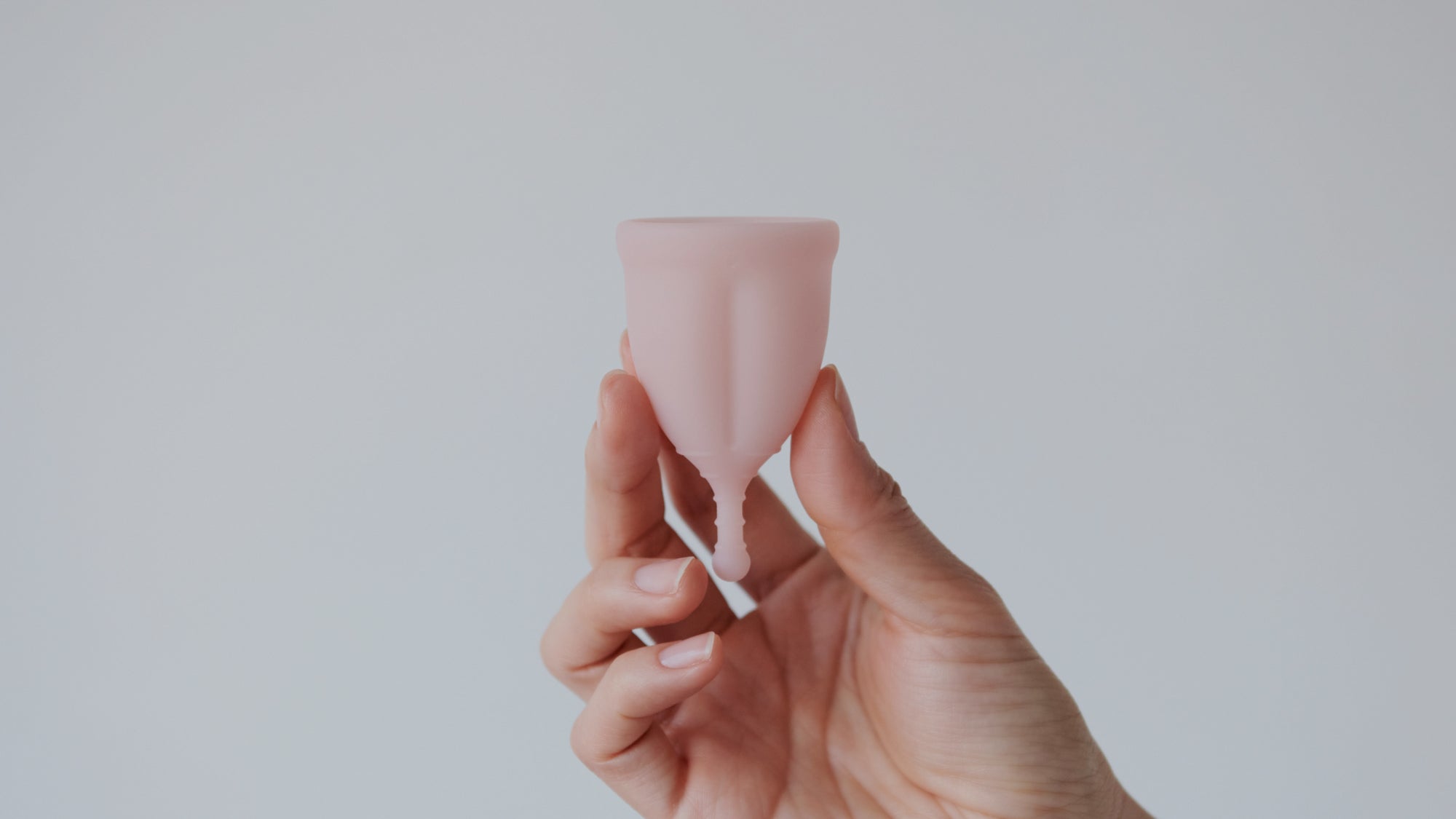
Sanitary products currently used: Menstrual cup (murmo), disposable napkins
-What day is your period?
A day like any other
-What image comes to mind when you hear the word "menstruation"?
I've never had a negative impression of it, but the three years of high school were filled with "spirit"
What clothes should I wear?
- From here on, I'd like to look back on half of my life, focusing on menstruation. When was your first period? How do you remember it?
I was 12 years old and in the spring of my first year of junior high school. I noticed a faint stain of what looked like blood on my underwear and thought, "Oh, maybe that's it?" When I was in about fifth grade, we had an education about menstruation at school. We had a lecture on what to do if you get your period during a school trip, so I had some knowledge. However, I didn't really understand, so I told my mother straight away, and she said, "Well, why don't you just put a napkin under it just in case?" So I did as she said, and the next time I had bleeding, I showed it to my mother again and she said, "That's your period, congratulations."
I thought, "Oh, it's a celebration" (laughs). In my family, the onset of menstruation meant becoming an adult, so it was considered a celebratory occasion. We ate red rice and my father gave me a belt as a present. At the time, I had been wanting a belt and had been saying that for a while, so I think he gave it to me at that time.
-How did you deal with your period when you were in junior high school?
I don't remember much from my time in junior high school, but I don't recall having any particular difficulties. I don't remember having severe period pain, having a lot of menstrual flow, or leaking. Maybe I just didn't pay much attention to it, but I think my period was relatively mild.
I was in a sports club. Of course, there were times when my period overlapped with practice, but in junior high, it was more like playing around, so it wasn't that difficult. Also, the uniforms for club activities in junior high were navy blue, so even if I leaked, it was hard for anyone to notice. So I hardly ever remember having to worry about my period because of club activities.
-Has your relationship with menstruation changed since you became a high school student?
I had a hard time with my period in high school. My club activities were "serious" and we had practice every day. The hardest thing was that we had to wear white practice uniforms. For competitions we wear navy blue, but for practice we had to wear white.
However, there was an atmosphere of girls helping each other out within the club. If I suddenly got my period and blood got on my uniform, everyone, regardless of seniority, would immediately let me know and I would go to the bathroom to change. We had morning and evening practice, so we had several changes of clothes ready. So I was never in trouble.
In high school, I just wanted my period to end as soon as possible. I always thought, "I'll get it over in three days if I put my mind to it!" (laughs). It actually ended in about three days, so it was pretty short. In middle school, I think it was about four days.
Maybe because I was doing strenuous exercise, I had a dull pain in my lower back during my period. It wasn't so bad that I couldn't move, but I always felt like my lower back was heavy. I was lucky because I had a light pain, but even if you had a heavy period, the atmosphere wasn't such that you could miss club activities because of your period, so I think it must have been difficult for those with heavy periods.
I started using tampons in my second year of high school. There was a time when my period coincided with a tournament. There was a tradition of not wearing underwear during tournaments to motivate the athletes. I think I was like, "Other strong schools are doing it, so we should do it too." I thought, "Oh, that's right, there are tampons," so I bought some and started using them. It wasn't because my parents recommended it, I just wanted to try it myself. I think I made some mistakes until I got used to it. But gradually I got better at using them.
-Please tell us about your life since becoming a university student.
When I went to university, I left my parents' home and started living alone in Osaka. I joined a sports club at university, but it wasn't as strict as my high school.
In the second half of my freshman year of college, I think it was during the cold winter months, I had irregular bleeding that continued for about a month. My mother has had many gynecological problems. When I was in high school, I had a total hysterectomy for uterine fibroids, and before that she had had a tumor removed for fibroid disease, so I started to worry, "Maybe there's something wrong with me too."
So I talked to my mother about it, and when I went back to visit my parents' house, I asked her to take me to the gynecologist she goes to. She did an ultrasound and physical examination, but there was nothing particularly abnormal. Perhaps she was relieved to hear that, because the condition healed naturally after that.
-Please tell us about your work since entering the workforce and how you deal with your period.
I majored in English at university, and after graduating I got a job at a concert production company right away. It was incredibly busy, and I couldn't see a future for myself if I continued working there, so I quit after just under two years.
After that, I returned to my parents' home and worked as a temporary office worker. After a while, my parents decided to build a house in Hiroshima for their retirement. Both of them were from Hiroshima, and they already had the land. When the house was completed, I was the only one to move into the new house in Hiroshima. I was around 24 or 25 years old.
In Hiroshima, I worked as a temporary office worker at a media company for about five years. I chose this job because it was very close to my grandmother's house, who lived alone. Every morning, I would park my car at her house, ring the doorbell to make sure she was alive, and then go to work.
There were no major changes in my menstrual cycle during this time either. However, I may have felt a dull pain in my lower back more often since I entered my 20s than when I was in high school. It was like, "Oh, my lower back feels heavy. Oh, it's my period." But it wasn't unbearable, so I didn't take any medicine.
I think I had PMS like most people, but I didn't even know the term back then. I was having fun living in Hiroshima, so it didn't bother me too much.
-What prompted you to move to Tokyo in your 30s?
When I was in my late 20s, many of my close friends at work decided to change jobs and move to Tokyo. Seeing this made me think, "I want to go there too," so I started job hunting, but it didn't go well at all. When I turned 30, I decided to stay in Hiroshima.
Then, my boss at the company I was working for asked me, "We're looking for a manager for a music artist. Would you like to try it?" I was over 30 and had already decided to stay in Hiroshima, so to be honest, I was hesitant. However, I had plans to visit my cousin in Tokyo over Obon, so I took the interview as a commemorative test, and it was accepted. A month later, I was already in Tokyo.
I worked at that company for seven years. To be honest, I was so busy that I didn't have time to worry about my period. I think it was partly because I've always been physically strong, but even after changing my environment, I didn't experience any irregular periods or any health issues.
Seven years later, due to salary and other factors, I decided to change jobs. I was around 37 years old. When I made my decision to leave public, I was fortunate to receive many offers from other companies in the same industry, and I transferred to one of them, where I now work as a full-time employee.
-Have you noticed any changes in your mind or body since entering your 40s?
For about a year, from the latter half of my 39th year, just before turning 40, I suffered from unexplained poor health. I felt like my mood was constantly clouded when I was at home, but would feel better when I went outside. This happened every time I returned home, and looking back, it must have been extremely difficult.
I'm not the type to go to the hospital, so I tried to heal with willpower, but one day an acquaintance introduced me to a Qigong teacher. I went to see him, half-believing, and he told me, "There are two living spirits in your house, but I've just removed them remotely."
I'm not the type to really believe in such things, so when I got home thinking, "Really? Is that really true?", the moment I opened the front door, I noticed that the atmosphere in the house had changed. I was really surprised. From that day on, I was able to sleep soundly at night. Since then, I haven't had that problem. It was really strange.
Also, I've realized that since I entered my 40s, it's become easier to gain weight and harder to lose it. Due to the COVID-19 pandemic, I've been spending more time at home and drinking at home, and the weight I gained then just hasn't gone away. I guess my metabolism has slowed down. The change in my body shape has been a big change.
Also, I feel like my menstrual flow has increased recently. I've heard that menopause can cause an increase in flow, and I think that might be it. It doesn't happen every month, but there are days when I feel like, "Today's flow is really heavy." When I first started using a menstrual cup, I went to see a play, and the cup was nearly full in the five hours between leaving the house and coming back. I was surprised because normally, even if I use it for 12 hours, it doesn't get full. Now, I try to change it earlier on heavy days, taking into account how much activity I'll be doing that day.
-Looking back on your period, what do you think now?
I think, "Women are expensive" (laughs).
But I also feel that it's not all bad. We're used to having cloth and synthetic fibers that aren't underwear constantly applied to our bodies every month. Watching my grandmother's care, I noticed that men seem to be very resistant to wearing diapers. They're not used to it, and it must feel humiliating. My grandfather also hated having to wear diapers right up until the day he died, and sometimes took it out on the nurses, which was different from my grandmother, who adapted to the situation.
I can't generalize, but I think women may be more receptive to such things, or more flexible. My best friend was in a diaper when she was hospitalized after being seriously injured in a traffic accident at the end of last year. When I heard her story and imagined myself in that situation, I felt like I could easily accept it, thinking, "Well, it can't be helped."
Although monthly periods can be difficult, in the long run I think they can help me learn to accept the changes in my body. I think they can be a strength that will help me live a more comfortable life in old age.
Note: "My Period" aims to provide an opportunity to think about and talk about menstruation, an issue that is often hidden, by recording and sharing how people of various generations and backgrounds have dealt with it. It does not endorse any specific products, services, or methods of coping. The content posted is based on each person's personal experience, so if you have any symptoms that concern you, please consult a medical institution.