My Period Vol.031 - "I wanted to put a sticker on my body that said, 'I'm feeling tingly, but it's due to hormones.'"
Yu, 46 years old, designer
Menarche: 2nd year of junior high school (age 13)
Current average period length: 5 days
Current average menstrual cycle: 24 days
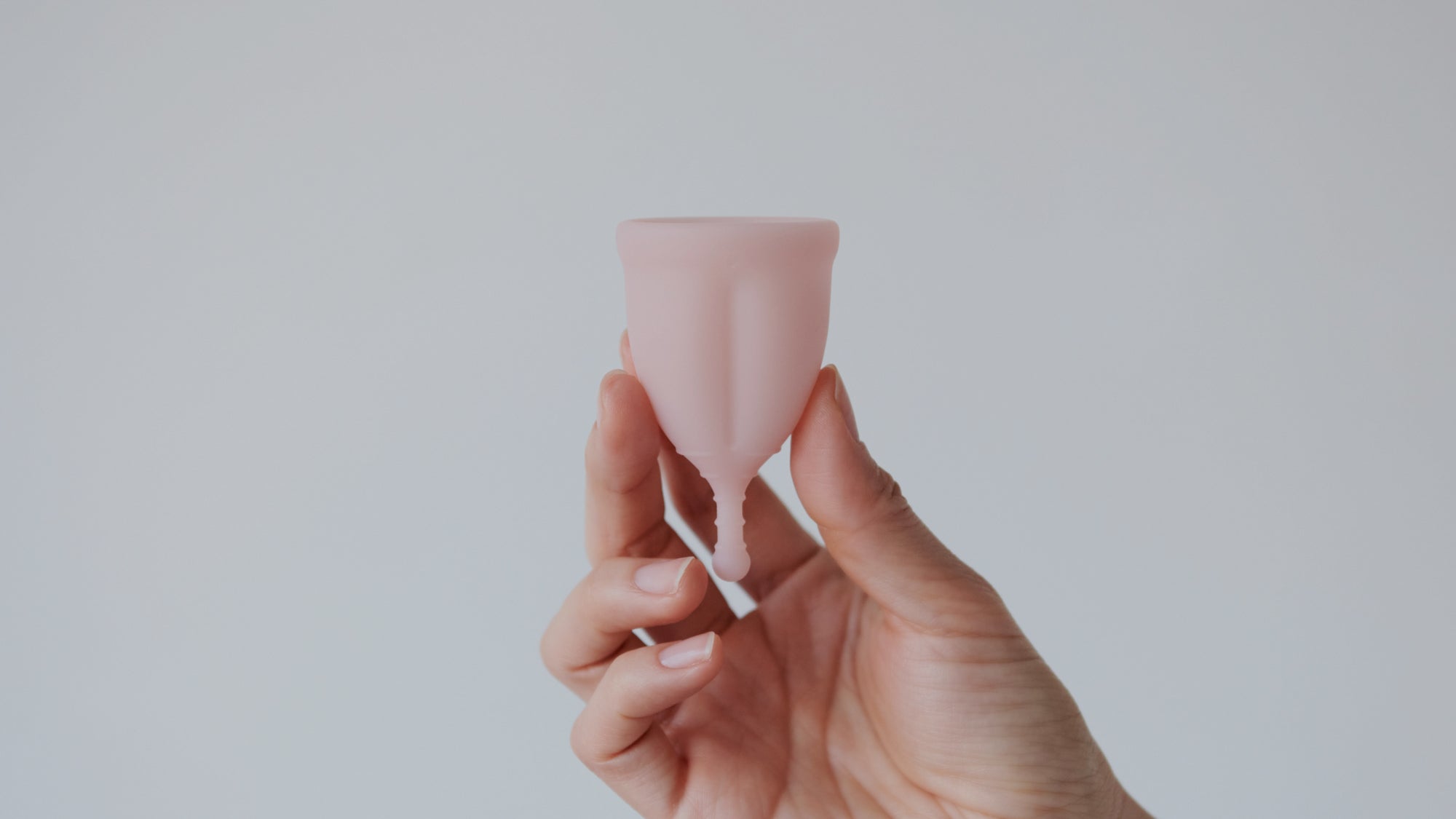
Sanitary products currently used: menstrual cup (murmo), panty liners, disposable napkins
-What day is your period?
Ah, it feels like my period has come
(Neither very negative nor very positive)
-What image comes to mind when you hear the word "menstruation"?
It's a bit of a hassle
- From here on, I'd like to look back on half of my life, focusing on menstruation. When was your first period? How do you remember it?
My first period was in middle school. I think it was the end of my first year or the beginning of my second year. I noticed something brownish on my underwear and thought, "What is that?", not realizing right away that it was my period. I remember feeling strange and wondering, "Is this how it starts?" It didn't "gush out" like they call it, but rather started as a gradual oozing.
My mother was at home, so I told her I might have had my period, and she immediately gave me some napkins. I have a vague memory of the period panties, but I think my mother prepared one for me later, and I started using that set.
-What was your period like when you were in junior high school?
Back then, my period flow was heavier than it is now, and my cycle was irregular. One day, I was at school without realizing it, and blood stained my navy uniform skirt. I sat down on my chair at school, worried that someone might have seen me, and hurriedly wiped it up with tissue.
During gym class, there were times when someone would see a child with menstrual blood running down their leg and gently tell them off, and I think small period-related incidents like "Oh no! That's terrible" were an inevitable part of school life back then. I was in the tennis club, but I don't particularly remember my period being difficult because of sports.
- Did your period change during high school?
I still had period pain in high school, but it was manageable with painkillers. There wasn't much change compared to middle school. As a soccer club manager, I didn't do any strenuous exercise, so I don't have any particular memories of my period being a burden.
- Tell me about your career path after graduating from high school and your period.
I went to university based solely on my high school grades, without giving it much thought. When I considered whether to work in sales or an office job after graduation, I began to worry that neither was right for me. At that time, as I had always loved fashion, I went to see the graduation show of a senior who was attending a fashion school. I was deeply moved by the show held at the dome venue. I strongly felt that I wanted to do that too!
I saved up for tuition by working part-time for a year, and then enrolled in a night school course at a fashion school in my third year of university. I started a double schooling lifestyle, and with my graduation thesis, school assignments, part-time work, and time with my boyfriend at the time, I was really busy every day. Looking back, this period was the second busiest of my life, and I think it was the second most difficult period after the period when I was balancing work and child-rearing. Despite living like that, I never had any problems with my period, and my cycle was regular. I also didn't have any severe period pains, so I think I have a fairly healthy gynaecological system to begin with.
-What path did you take after graduating from university?
After graduating from university, I became an office lady at a local company as a new graduate. I still had two years left of studying at the fashion school I had been attending since university, so I started a life of working during the day and attending school at night.
Two years later, I graduated from fashion school and finally got a full-time job in fashion. I got a job at an apparel trading company in Nagoya. I started working as a clothing designer. It was a job that allowed me to put what I had learned at school to good use, and it was the moment I realized, "I've finally decided on this path."
I worked at this company for about four years, during which time I got married. I continued working after marriage, but my husband was transferred, so we moved to Tokyo at the age of 29. I also quit my job at the same time and started a new life in a new place.
In Tokyo, I changed jobs to a small apparel company, but it was a so-called black company, and I had to go to work at 7am every day and not go home until midnight. I felt that my body couldn't take it if I continued like this, so I quit after about six months.
After that, I changed jobs again to a larger, more stable company, where I also started working as a designer. I continued working there for a few years until I gave birth.
At this time, my periods were still light and I didn't notice any particular changes, but I did experience PMS, which affected my mental health. I used to get emotional and irritable before my period, and I thought I just had a bad temper. After giving birth, I realized that this was due to hormones.
- Please tell us about your pregnancy, childbirth, and postpartum period.
I hadn't specifically decided to have a child. I was just using birth control loosely, and I ended up getting pregnant naturally. I gave birth when I was 31.
I hardly had any morning sickness during my pregnancy, except for a few picky eating habits. At the time, I had an uncontrollable craving for a large serving of McDonald's fries, and there was a time when I ate them almost every day. However, it wasn't so bad that I had to stay in bed, so I feel like "maybe my condition was mild."
I gave birth at a hospital near my parents' house in Nagoya. I didn't have any particular preferences, and it was a typical birth using labor-inducing drugs. I wasn't interested in water births or anything like that, and I just thought, "I'd be happy if I could give birth normally, like everyone else does."
After returning to Tokyo, my husband went to work and I was left alone with my newborn baby. I didn't have many friends and had little connection to the community, so I started going to the local children's center and parenting classes, and gradually I made friends with other moms.
However, after about 3-4 months, I started to think, "Maybe I'm getting bored of this." I realized that I really liked my job, and that I could be myself while working.
At that time, I had a chance to have dinner with a former colleague from my time in Nagoya, and I asked him, "Are there any jobs available right now?" He contacted me later and said, "They want you to come, what do you think?" I immediately thought, "I want to go!" When he asked me, "Can you come next month?" I replied, "I'll find a place to leave my child." From there, I quickly started looking for childcare options.
Because I was too late to apply for a nursery school, I decided to take advantage of the "childcare mom system" in Ota Ward, where I was living at the time. This system allows two people with childcare worker or nursing qualifications to look after up to three children at home, and thanks to this, I was able to successfully get a job at the Tokyo branch of the company I was working for in Nagoya.
In the midst of all this, my period resumed when my baby was about 7-8 months old. I continued breastfeeding, but I was not breastfeeding during the day for long periods, so perhaps that's why it resumed so quickly. There were no major changes in my period after it resumed.
Later, when my child turned two, we decided to put him in nursery school, but at the same time we bought a house and moved to a different ward, so I ended up driving 45 minutes to and from nursery school every day. In the morning, I would drive him to nursery school, then take the train from the nearest station to work. In the evening, I would return by train, pick up my child, and drive home. This routine continued for about two years.
Looking back now, I think it was the busiest time of my life. It was far tougher than the double schooling I had as a student.
Combined with the busy schedule of work and child-rearing, before my period I would get irritated over the slightest thing and snap at my husband. Then, immediately afterwards, I would blame myself and cry alone in the bath... This happened often.
Around this time, the term PMS (premenstrual syndrome) became more widely known, and I realized that it wasn't my personality that was to blame, but rather my hormones. I really wanted to tell my husband, "I'm feeling itchy right now, but it's because of the hormones," but I couldn't bring myself to say it. Looking back, I wish I'd put a sticker on my body that said, "I'm feeling itchy right now, but it's because of the hormones" (laughs).
-Have you noticed any changes in your period since then?
If there is one thing, it would be discovering the menstrual cup in my mid-30s. Until then, I had always used pads. Absorbent underwear hadn't existed yet, and even though I had heard of menstrual cups, I never had the opportunity to try them.
Then one day, a fellow yoga student told me, "My yoga teacher recommended that I try a menstrual cup, and it was really comfortable." I was interested, but to be honest, I was a bit worried at first.
"What if I can't get it out?" "Will I be able to put my finger in my vagina properly?" I felt a sense of anxiety similar to that of being unable to remove my contact lenses.
However, when I actually tried it, it was surprisingly okay. I mustered up the courage to buy one online and started off using one made overseas. It took a little skill at first, as I had to hold it firmly with my fingers when taking it out and it took quite a bit of strength to fold it and insert it, but even so, I thought, "This might actually work." From then on, I started using menstrual cups in conjunction with pads.
After that, I think I came across Murmo when I was in my 40s.
The first thing that surprised me was how soft it was and how easy it was to insert. Compared to the overseas-made cups I had used up until then, there was no need to fold it with force, it went in smoothly, and it didn't hurt when I took it out. I realized, "Ah, this is the comfort of a menstrual cup."
I keep a menstrual cup in the bathroom, and one time my son found one and asked, "What's this?" I was glad that I was able to explain it to him in a natural way: "Women have periods, right? It's a sanitary product used for that." Even though he's a boy, I think it was really important for me that I was able to tell him about it without hiding anything.
- Tell me about your current menstrual cycle.
Since I entered my 40s, my menstrual cycle has gradually become irregular. Originally, it was a 24-day cycle, and it was quite consistent, sometimes coming twice a month, but over the past year or two, I feel like that rhythm has been disrupted. Sometimes it doesn't come for two or three months, and I've started to feel like, "Oh, it's coming to an end."
Since I've always had a fast cycle, I've taken it for granted and thought, "Maybe I'm the type that ends my period early."
I don't have any menopausal symptoms at the moment. But honestly, not having my period is such a relief. I still haven't used up all the pads I bought a year ago. Now, I'm completely satisfied with just a menstrual cup and underwear liners.
-Looking back on your period, what do you think now?
When I think about it, I'm surprised that even though I had my period every month, I somehow don't remember it.
As we were talking, I remembered that when I went back to my husband's parents' house for New Year's for two years in a row, it coincided with my period, so I had to bring back used sanitary napkins in a plastic bag.
At the time, I was certainly thinking, "What should I do?" and "This is such a hassle," but once it was over, I even forgot about that "trouble." It was like forgetting the pain once it was over, so I thought maybe it would be a good idea to face it a little longer in the short time I had left.
Note: "My Period" aims to provide an opportunity to think about and talk about menstruation, an issue that is often hidden, by recording and sharing how people of various generations and backgrounds have dealt with it. It does not endorse any specific products, services, or methods of coping. The content posted is based on each person's personal experience, so if you have any symptoms that concern you, please consult a medical institution.