My Period Vol.017 - My Period Hasn't Come, My 15cm Ovarian Cyst Isn't Flat, So I Learned the Importance of Periods
Rino, 33 years old, nurse
Menarche: 3rd year of junior high school (age 15)
Current average period length: 6 days
Current average menstrual cycle: 32 days
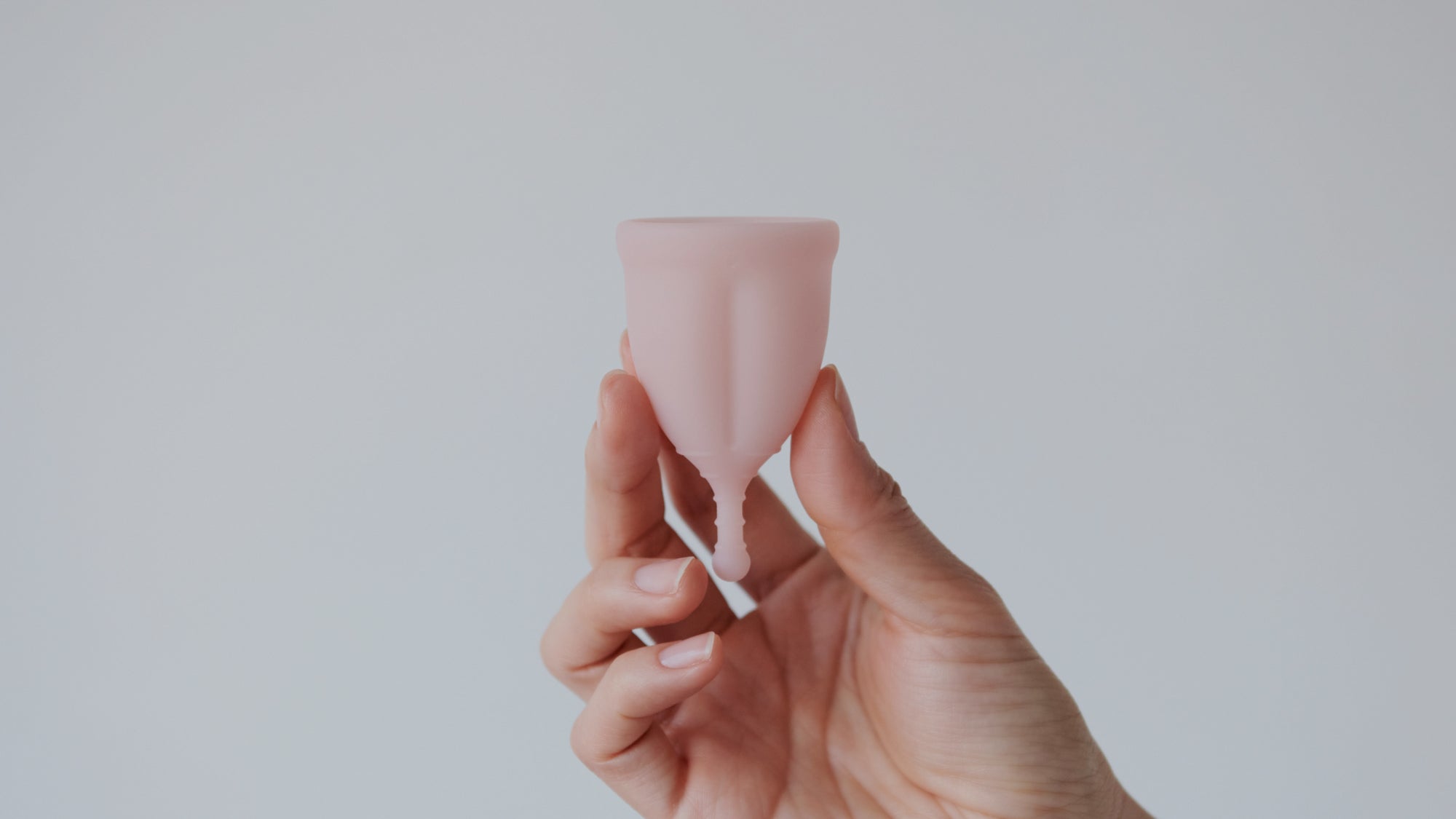
Current menstrual products: Menstrual cup, disposable pads
-What day is your period?
Whether it's good or bad, I'm glad you came.
-What image comes to mind when you hear the word "menstruation"?
Women's
- From here on, I'd like to look back on half of my life, focusing on menstruation. When was your first period? How do you remember it?
When I was 15 years old and in my third year of junior high school, I got my period for just one day. After that, I didn't get my period for two years.
I was the only girl in my middle school class who hadn't had my period, so I couldn't join in when my friends were talking about periods at school, and I felt like I was behind everyone else, being left behind. Everyone else was absent from swimming lessons because they were on their period, but I couldn't because I wasn't on my period. I knew that you can't go into the pool if you're on your period, but I'd never experienced it, so I wondered what it actually meant to not be able to go into the pool, and somewhere deep down I felt like I was different from everyone else.
When I got my first period, I told my mother, "It's finally here!" and she cooked red rice for me to celebrate, but it was just a one-day sudden period and I graduated from junior high school without any changes.
-How did you change when you became a high school student?
For high school, I moved away from my parents and enrolled in a school outside of my prefecture. I lived in a dormitory away from my family, so it was difficult to talk to anyone about the fact that I hadn't had my period since middle school. Cell phones were banned at the time, and the only way to contact the outside world was through the public phones, of which there were about seven in the dormitory. I didn't want people around me to hear our conversations, and I was so busy with club activities and studying that I didn't bother to call my parents and tell them. I couldn't even tell my new friends at high school that I hadn't had my period, so I continued like this into my second year of high school.
When I was in my second year of high school, I finally called my mother to tell her that I hadn't had my period. The reason was that I was worried that I might not be able to have children in the future. We decided to go to a gynecologist, so my mother rushed over from faraway Miyazaki with my health insurance card, and we went to the gynecologist together.
That experience remains a truly bitter memory. There was a school rule that I could only go out in my uniform, so I put it on and headed to the gynecologist. At the time, the TV drama "14-Year-Old Mother" was popular, so I remember people around me in the waiting room giving me strange looks. What's more, even though I had never had sexual intercourse at the time, the gynecologist asked me in front of my parents, "Have you really never had sexual intercourse before?", which was embarrassing.
An ultrasound revealed that my uterus had become small and hardened due to stress, so I was given hormone injections and oral medication to induce my period. Due to a medical error by a nurse, I was given the wrong hormone injection, and because I was given twice the amount of hormones, I became extremely nauseous and nauseous, and I remember being unable to eat. I only received the injection once, but continued taking the hormone medication, and as a side effect, I gained 10kg.
However, thanks to this treatment, I was able to get my period regularly. I continued taking the oral hormone medication for about six months to a year. After that, I was asked if I wanted to switch to the pill, but I said, "I don't want to take it, because I want to try to see if I can get my period without taking medication," and I finished the treatment.
After I stopped taking the medicine, my period came back regularly, which was really great. The doctor at the time told me, "It's better to get it treated properly when you're young than when you're an adult," and although there were a lot of things that happened, I'm glad I went to the hospital and received treatment.
-Have you noticed any changes in your period since you entered your 20s?
The high school I attended had a five-year nursing school, so I started working as a nurse at a hospital when I was 20 years old.
When I started working, my days were so busy that it was difficult to make ends meet. I lived alone and commuted constantly between work and home, so I didn't have time to go to the supermarket to buy groceries. There were days when the only thing in my fridge was wasabi, and I was living a life where I didn't have time to take care of my body.
In the midst of all this, I had a strange feeling that there was something touching my stomach. When I touched my stomach, I felt a lump that moved, and even though I was on a diet, my lower abdomen was still bulging. I noticed it, but because I was busy with work, I just left it as it was.
My mother is also a nurse, so when I happened to go back to my parents' house, I asked my mother, "I feel something moving in my stomach, can you please touch it?" She said, "You have to go to the hospital right away!" and I ended up having an internal medicine examination. I think I was 28 years old at the time.
The X-ray revealed a fairly large tumor, and the doctor explained that I needed to undergo a colonoscopy immediately. My father had been diagnosed with stomach cancer around the same time, so I remember looking my mother in the eye and almost crying in the outpatient clinic, wondering if I might have cancer too. However, a CT scan revealed that it was an ovarian tumor. By the time I was examined, the tumor had already grown to about 15 centimeters and was putting pressure on my intestines. I'd heard that most ovarian tumors are benign, but they also explained that it might be cancer, so I remember thinking, "There's still so much I want to do and so many people I want to see before I die!"
Later, when I was 29, I underwent surgery to remove an ovarian cyst at a gynecological hospital. Because the abscess was large, it could not be completely removed laparoscopically, so a small incision was made in my abdomen to remove it. In the end, I was relieved to find that the tumor was not cancerous but benign. Someone suggested that I should have my ovaries removed, but given my age, I chose to keep them.
After the surgery, my periods became much easier. To be honest, before that, there were times when the pain was so bad I couldn't walk. My period would come while I was out, and I couldn't walk because of the pain, so I would stop by a manga cafe, take some medicine, lie down for about an hour, and then I would be able to walk again. Even though my periods were so painful, I didn't realize how bad my period pain was until the doctor said to me, "Your period pain was really severe, wasn't it?"
Even after the tumor was removed, I still have a dull pain similar to that experienced during my period, but the pain is no longer so severe that I can't walk, and my period has become regular.
-How has your period been since you turned 30?
I have been working at a gynecology clinic since July of this year, and more than 100 patients visit the clinic every day.
I don't often hear people talk about menstruation in their private lives, so I learned that everyone has their own concerns. Some people are found to have uterine fibroids during the examination, while others have ovarian cysts or endometriosis, people who have missed their period, people with irregular bleeding, pregnancy, and various concerns about the delicate areas. I have come to realize that people visit the gynecologist for a wide variety of symptoms.
Through my work as a nurse at the gynecology department, I've heard many people talk about their periods, and I think I've come to face my own period more. I'm embarrassed to say this, but there are some things I've learned since I started working at the gynecology department. For example, I learned that you can change your period date with the pill, and that there are many different types and uses of the pill.
-Looking back on your period, what do you think now?
I think there are things you can do to prevent severe menstrual pain and heavy flow by knowing that they are not normal. I think knowledge is very important, and knowing this can help ease anxiety.
It can also make you realize that when you push your body too hard or try too hard, it can affect your period.
So recently, I've been trying to be careful not to let stress build up too much. It's a small thing, but when I'm feeling down, I eat something delicious, and even when my days are busy, I light candles and take some time to relax. I think I've started to consciously take time to take care of myself more than before.
Before, every day felt like a painful ordeal, but since I entered my 30s, I've learned how to deal with myself, and I think that my life and periods have gradually become easier, in a good way.
There aren't only good things about menstruation, but I hope we can continue to have a good relationship with it.
"My Period" aims to provide an opportunity to think about and talk about menstruation, an issue that is often hidden, by recording and sharing how people of various generations and backgrounds have dealt with it. It does not endorse any specific products, services, or methods of coping. The content posted is based on each person's personal experience, so if you have any symptoms that concern you, please consult a medical institution.