My Period Vol.002 - I'm feeling a little better now because I've learned to prioritize my own choices over my mother's advice
MN, 38 years old, office worker, menarche: 10 years old, current average number of menstrual days: 6 days, current average menstrual cycle: 25-35 days, currently used sanitary products: menstrual cup, absorbent underwear, occasional paper napkins depending on schedule
-What day is your period?
A day when you're not feeling well. A day when you have to be careful about a lot of things.
-What image comes to mind when you hear the word "menstruation"?
blood.
- From here, I'd like you to reflect on your life, focusing on menstruation. When was your first period? How do you remember it?
It was the winter of my fourth year of elementary school, when I was 10 years old.
Although I clearly remember the time, I have no recollection of what it was like at the time. At that time, my dream was to become an obstetrician-gynaecologist or midwife, because I loved babies. I would go to the library and read books about the human body, secondary sexual characteristics, and reproduction, so I had a wealth of knowledge, and so I was probably able to calmly experience my first period.
It was awkward, but I told my mother and I think she said "Congratulations." You don't know how to respond, but when someone says congratulations you have to say "thank you." Then I think she asked me, "Shall we cook red rice?" My mother said that when it was her turn, she did that. I absolutely didn't want my family to know that I was on my period, but I also didn't want them to think I was embarrassed, so I answered, "I don't really need red rice. I'd rather have cake, but please don't tell Dad." I'll never forget that. We all ate cake even though it wasn't anyone's birthday. Thinking about it now, it's pretty surreal, isn't it? Lol
- After that, how did you deal with periods as you grew into adulthood?
As I entered the upper grades of elementary school, more and more girls around me started getting their periods, and I remember girls using slang to say things like, "My period is so hard today." Honestly, I barely remember what my period was like in middle and high school. I remember my lower back hurt more than my stomach, and my crotch hurt (pubic pain), which was pretty depressing. My best friend had terrible period pain and anemia, and she collapsed on the train and had to be taken to the hospital, she couldn't stop feeling nauseous, she couldn't get up and had to miss school, and it seemed like it was really tough every month. That impression was so strong that maybe I don't remember my own period as anything too serious.
Come to think of it, I didn't realize it at the time, but I would often suddenly become irritable right before my period. I would press my face into the pillow and scream at the top of my lungs in my room, or I would punch the pillow repeatedly to suppress the urge to hit something. It must have been PMS. As I grew older, I no longer felt the urge to attack anything, but instead I would feel a strong sense of anxiety, or a sense of frustration about my inability to achieve anything, or thoughts like, "What do I want to do? Am I just going to grow old like this?". After this happened over and over again, I finally realized that it was a feeling that occurred regularly before my period, and it didn't bother me as much after that.
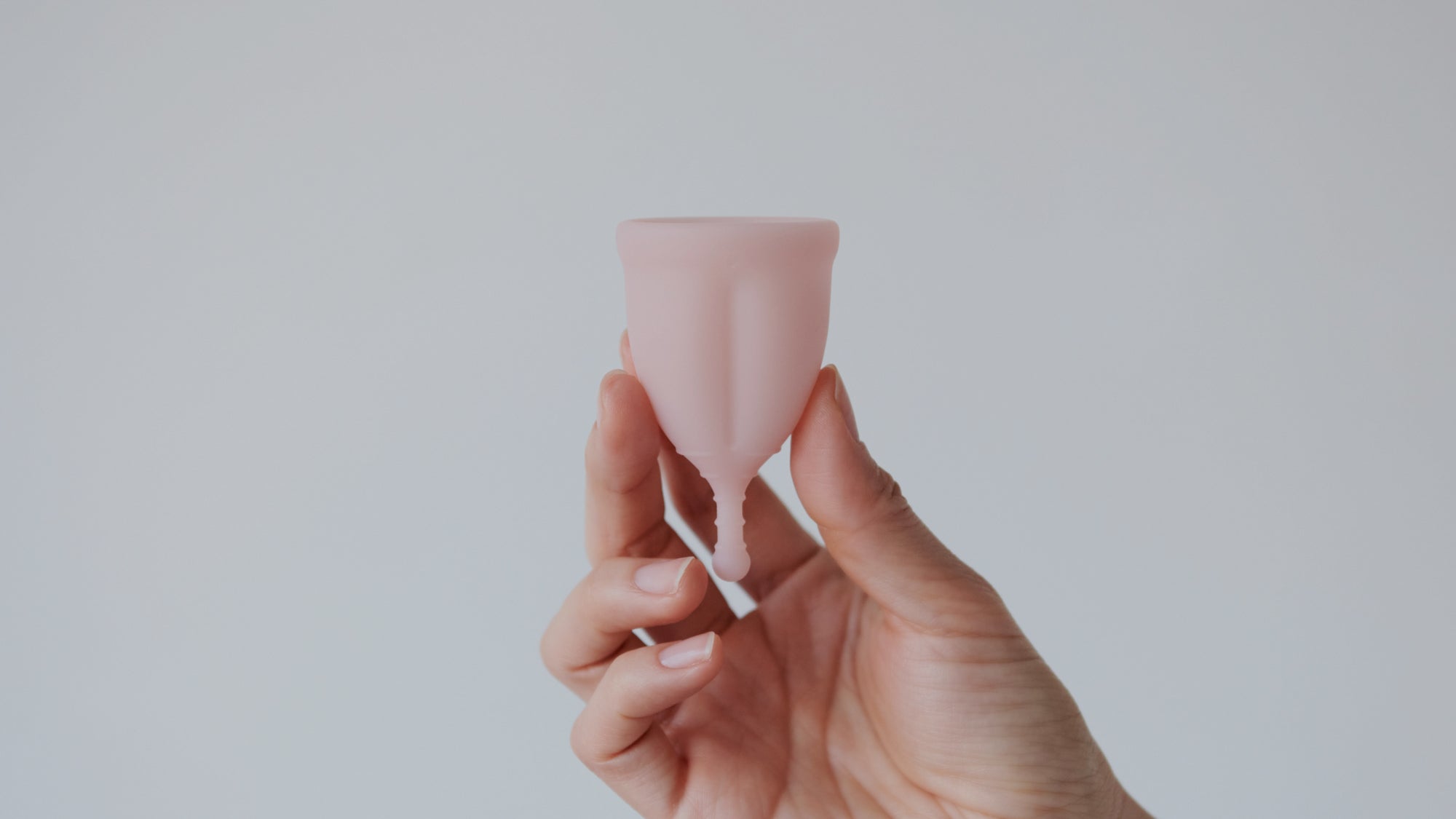
I first used tampons when I was a university student. I'd often read teen magazines in elementary and middle school, and I'd often see ads for them, so I knew about them, and I was interested in them because I'd seen how convenient they were for sports and bathing. But my mother was conservative in many ways, and that included menstrual products. I was always told, "You can't use tampons until you're married, and you can't use them when you're young." I wonder why? lol I happened to be talking about menstrual products with a friend at university, and she was using tampons. She said they're convenient and easy once you get used to them. I thought, "I'll give it a try!" and bought some myself. YouTube wasn't around back then, so I practiced in the bathroom, following the instructions on the box. I imagined myself getting stuck and going to the gynecologist. After I got used to tampons, I started using them on heavy days. Now I use a menstrual cup instead.
- What about when you became an adult?
The meaning of pregnancy has changed since I got married. Things that I didn't think had much meaning before are now directly linked to pregnancy. I started to worry about things like, "Oh, come to think of it, is my period late?" or "When am I ovulating?"
My cycle is irregular, sometimes it's 25 days, sometimes it's 35 days. I can't figure out my schedule in the future. But there's one thing I can tell. I can tell from my body's condition that "today or tomorrow is ovulation day!" Then my period comes two weeks later. So I can at least know my immediate schedule. Lol
One time, my period was quite late, and just as I was thinking maybe it was a pregnancy test, my period suddenly came. Later, when I was actually pregnant, I had an ultrasound at the hospital and they said, "There are traces of a recent miscarriage." I thought, "Oh, that wasn't a period, it was a miscarriage!" (I had experienced it before, so I just took it lightly.) I didn't know that miscarriages can leave traces. I think it's like evidence of implantation. By the way, I currently have three daughters.
Then, there's one other thing that has changed since I became an adult: I now take medicine when I feel pain or discomfort. Growing up, my conservative mother (lol) always told me, "You're not sick, so it's best not to take medicine as much as possible," and I never took painkillers, even during my period.
After giving birth to my first child, I suffered from severe mastitis and repeatedly developed high fevers. The hospital prescribed me painkillers and fever-reducing medications, saying, "Just take these if you get a fever," "Don't endure the pain," and "I'll give you extra." When I returned home after giving birth, my mother would see me trying to take the medicine and ask, "Is it okay to take medicine (even though you're breastfeeding)? Are you sure it's okay? Maybe it's better not to take them." They were prescribed by my obstetrician-gynecologist. Of course it was okay to take them. My body was exhausted after giving birth, I was sleep-deprived, and I had a fever over 104 degrees, and my breasts were so sore that even touching my pajamas was enough to make me scream. Taking the medicine really helped. I think it was the first time I realized that it was okay to take medicine when I was in pain. The extra prescription medication I was given became like a talisman. I was constantly afraid of getting mastitis again, but just knowing I could take this if I got a fever helped me feel a little more at ease.
After giving birth to my second and third children, when I was discharged from the hospital, I would tell them, "I'm likely to develop a high fever, so please prescribe me some antipyretics and painkillers!" These antipyretics were actually just tranquilizers for me.
Maybe it's because I gave birth, but lately the pain I've been experiencing from my period isn't in my stomach or lower back, but has become a headache. Especially on the second day, I have a headache all day, and when that happens, I don't hesitate to take medicine. Up until now, I'd often thought, "I'm so proud of myself for being able to do my best without taking medicine!", but that thought has now vanished. There's no need to endure it, and if taking medicine makes me feel better (without negatively impacting my body, of course!), I want to proactively incorporate it and be in control of my own body.
-How do you feel when you look back on your period?
It's still ongoing and will continue, but I think I've finally started to get along with it recently.
If anything, I'm more scared of my daughters' periods than my own, and I find myself on edge in all sorts of ways. When my eldest daughter had her first period, based on my own experience, I didn't congratulate her, and of course I didn't talk about red rice. I just explained it to her matter-of-factly and treated her as if nothing had happened... That's how it felt. I'm not sure if that was the right thing to do. But I do feel like it would have been better if we'd talked about various things earlier, so that we could have had a relationship where we could ask each other questions more easily, and I'd like to use that experience next time.
"My Period" aims to provide an opportunity to think about and talk about menstruation, an issue that is often hidden, by recording and sharing how people of various generations and backgrounds have dealt with it. It does not endorse any specific products, services, or methods of coping. The content posted is based on each person's personal experience, so if you have any symptoms that concern you, please consult a medical institution.